
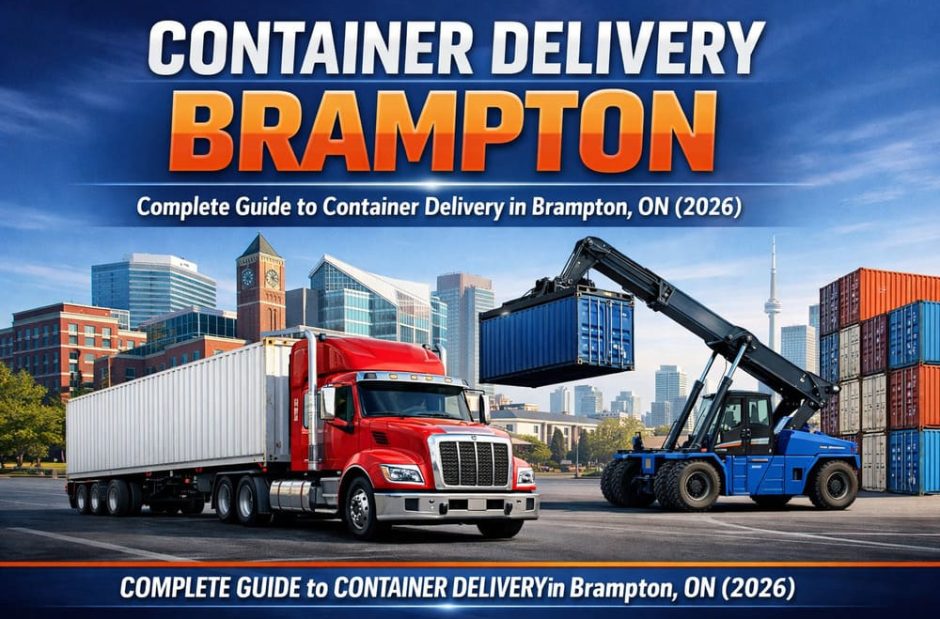
Brampton has become one of the most active logistics hubs in Ontario, especially for containerized freight moving between the Port of Toronto, rail terminals, distribution centers, and regional warehouses. As container volumes continue to grow, demand for reliable container delivery Brampton services has increased significantly.
This guide explains how container delivery in Brampton actually works, what types of container transport are available, how costs are formed, and what businesses should consider when planning container moves in Brampton, ON. The focus is on real-world logistics operations rather than marketing claims, making this a practical reference for 2026.
Why Brampton Is a Key Location for Container Delivery
Brampton’s strategic position within the Greater Toronto Area makes it a natural logistics corridor. The city sits close to:
- Major highways (401, 410, 407)
- CN and CP rail terminals
- Toronto intermodal yards
- Warehousing and fulfillment clusters
- Cross-border routes into the United States
Because of this infrastructure, container delivery in Brampton ON often involves a mix of port drayage, rail intermodal transport, and local last-mile trucking.
As a result, container delivery here is rarely a simple point-to-point move. Instead, it requires coordination between terminals, chassis providers, warehouses, and delivery locations.
What “Container Delivery Brampton” Actually Means
Many people assume container delivery refers only to dropping a container at a warehouse. In reality, container delivery Brampton can include several different logistics scenarios:
- Port-to-warehouse container delivery
- Rail terminal to Brampton container transport
- Empty container return movements
- Loaded container repositioning
- Transloaded cargo delivery
- Cross-border bonded container moves
Understanding which type of delivery you need is critical for accurate planning and cost control.
Types of Container Delivery Services in Brampton, ON
Port-Based Container Delivery
Containers arriving at marine terminals are moved inland through drayage services. Although Brampton is inland, many containers destined for the area originate from ports connected via rail or truck through Toronto terminals.
This type of container delivery in Brampton requires careful scheduling to avoid demurrage and storage fees.
Rail Intermodal Container Delivery
Rail plays a major role in container logistics in Ontario. Containers often arrive at intermodal rail yards and are then delivered by truck to Brampton.
Rail-based container delivery is commonly used for:
- Long-distance domestic freight
- Import containers from the West Coast
- High-volume distribution shipments
This method can be cost-effective, but it requires precise coordination.
Local and Regional Container Delivery
Local container delivery within Brampton or the GTA typically involves short-haul trucking from nearby yards, terminals, or warehouses.
This service is often used for:
- Warehouse replenishment
- Manufacturing inputs
- Retail distribution
- Temporary container storage solutions
Transloading and Destuffing-Based Delivery
In many cases, containers are not delivered as sealed units. Instead, they are destuffed at a transload facility, and cargo is delivered in domestic trailers.
This approach helps:
- Reduce delivery constraints
- Improve dock compatibility
- Optimize warehouse receiving operations
Container Sizes Commonly Delivered in Brampton
Most container delivery Brampton ON operations involve standard ISO containers:
- 20-foot containers (dense or heavy cargo)
- 40-foot containers (high-volume shipments)
- 40-foot high cube containers (taller cargo)
Specialized containers such as reefers or open-top units are also used, but less frequently.
Typical Industries Using Container Delivery in Brampton
Brampton’s container traffic supports a wide range of industries, including:
- Retail and e-commerce distribution
- Food and consumer goods
- Manufacturing and automotive supply chains
- Construction materials
- Import/export wholesalers
These industries rely on predictable container delivery in Brampton to maintain inventory flow and production schedules.
How Container Delivery in Brampton Is Priced
Pricing for container delivery Brampton depends on multiple variables rather than a flat rate.
Key Cost Factors
- Distance from terminal or rail yard
- Container size and weight
- Chassis availability
- Delivery time windows
- Warehouse accessibility
- Congestion and peak season surcharges
- Detention and demurrage risks
Because of these variables, container delivery pricing is usually quoted per move rather than per kilometer.
Typical Price Ranges (Very Approximate, 2026)
| Delivery Type | Estimated Range (CAD) |
|---|---|
| Local container delivery | $350 – $750 |
| Rail terminal to Brampton | $700 – $1,400 |
| Long-haul intermodal delivery | $1,800 – $4,000 |
These figures are indicative only. Actual pricing varies based on conditions and timing.
Common Challenges with Container Delivery in Brampton
Congestion and Scheduling
Brampton’s proximity to major terminals means congestion is common, especially during peak seasons.
Chassis Shortages
Availability of chassis can directly impact delivery timelines.
Warehouse Constraints
Not all facilities are equipped to receive containers efficiently.
Compliance and Weight Limits
Overweight containers require special handling and permits.
Addressing these challenges requires experience and planning rather than last-minute booking.
How Container Delivery Connects to Toronto Drayage
Brampton container delivery is closely linked to Toronto’s drayage ecosystem. Many containers serving Brampton pass through Toronto-area terminals and yards before final delivery.
For businesses needing broader GTA coverage, it’s useful to understand how Toronto drayage services integrate with Brampton container transport. You can explore regional operators and service coverage through the Toronto-focused drayage directory available on Container Intermodal.
Choosing the Right Container Delivery Partner
When selecting a provider for container delivery in Brampton ON, focus on operational capability rather than advertised speed.
Key considerations include:
- Terminal and rail access
- Experience with Brampton-area facilities
- Ability to manage empty returns
- Knowledge of weight and compliance rules
- Integration with warehousing and transloading
Working with an experienced container delivery company that understands both GTA congestion and inland routing can significantly reduce risk and cost over time.
The Role of Container Delivery Companies in 2026
In 2026, container delivery is no longer just trucking. It’s a coordinated logistics function involving technology, compliance, and infrastructure planning.
Modern container delivery providers increasingly offer:
- Real-time shipment visibility
- Proactive exception management
- Integrated intermodal planning
- Support for cross-border logistics
These capabilities are especially important in complex markets like Brampton.
Container Delivery vs. General Freight Trucking
It’s important to distinguish container delivery Brampton services from standard freight trucking.
Container delivery involves:
- Marine or rail containers
- Chassis management
- Port and terminal regulations
- Time-sensitive fees
Standard trucking typically does not involve these complexities.
Planning Container Delivery in Brampton: Best Practices
To avoid delays and unnecessary costs:
- Confirm warehouse receiving capabilities in advance
- Plan container return locations
- Account for peak-season congestion
- Work with providers familiar with local routes
- Build buffer time into delivery schedules
These steps make container delivery more predictable.
Final Thoughts
Demand for container delivery in Brampton continues to grow as supply chains become more complex and time-sensitive. Understanding how container delivery works — from ports and rail yards to warehouses and final destinations — is essential for efficient logistics planning.
By approaching container delivery as a coordinated process rather than a simple truck move, businesses operating in Brampton can reduce risk, control costs, and improve reliability in 2026 and beyond.